
UNESCO Visitor Centre
Understanding a World Heritage Site
Practical information
- Dates
Permanent exhibition
- Audience
All ages
- Languages
EN, FR, DE, LU
- Price
Free
Free entry, no ticket needed
Prices and reductions- Venue
Lëtzebuerg City Museum
- 14, rue du Saint-Esprit
- L-1475 Luxembourg
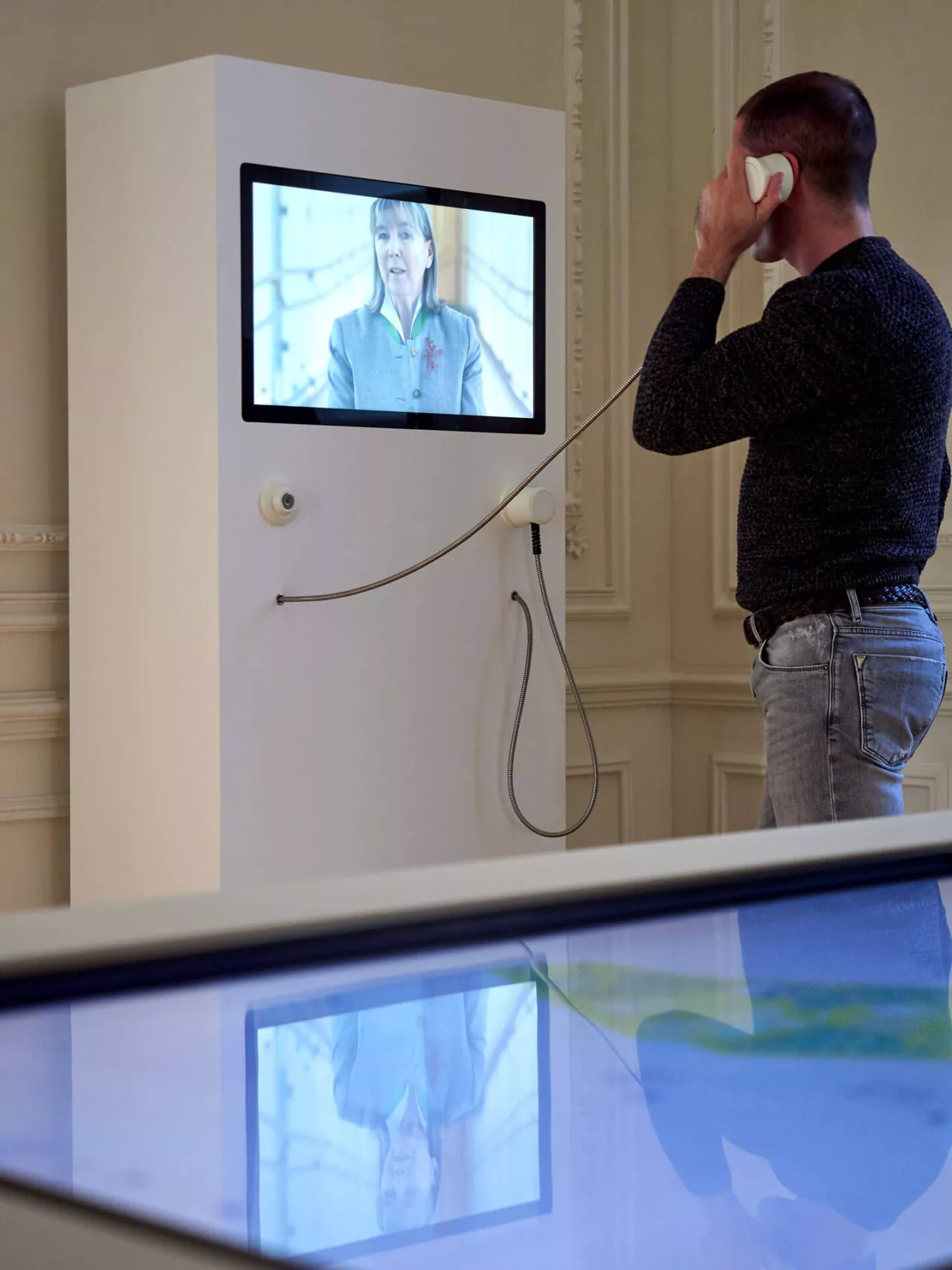
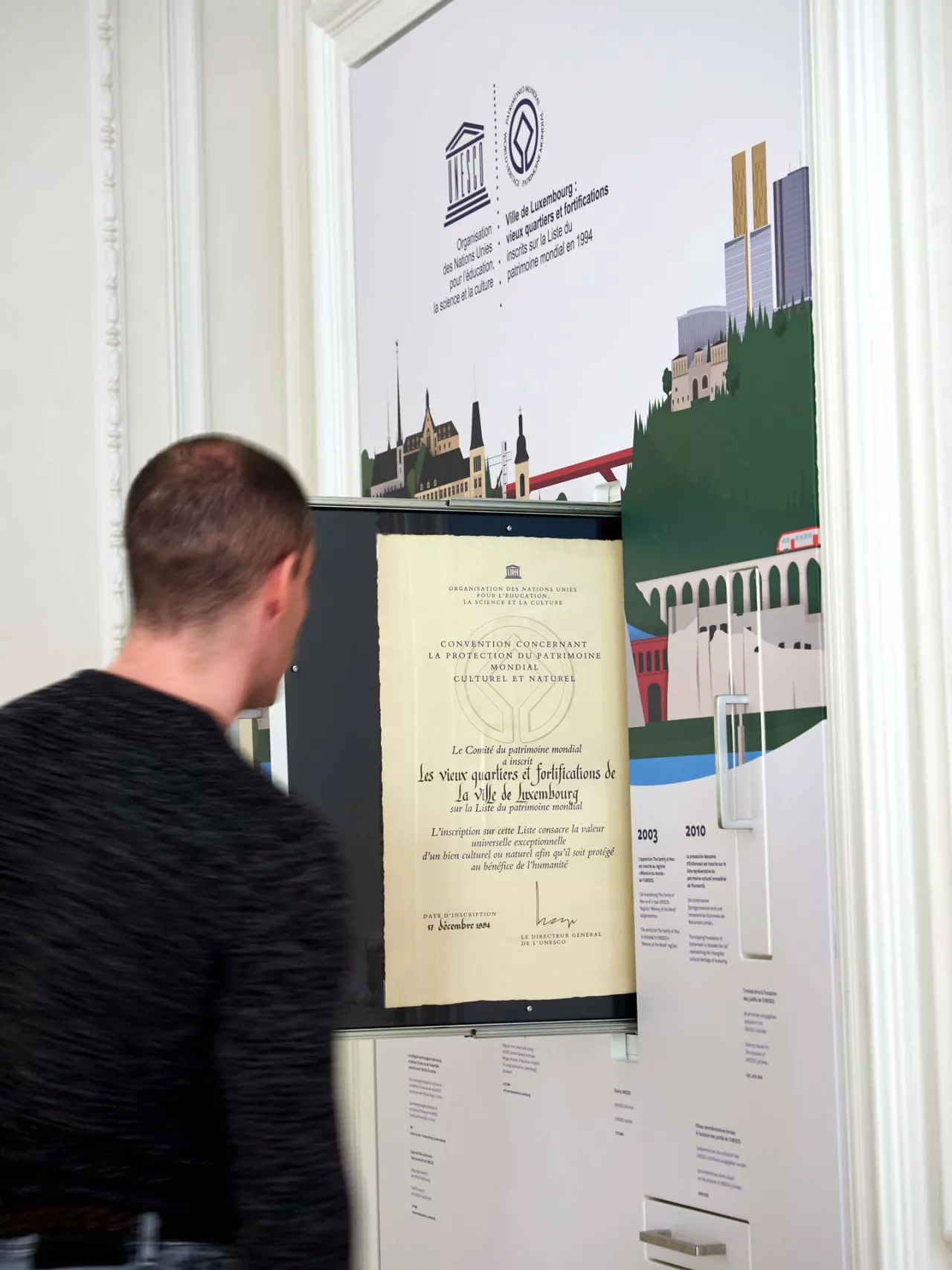
On 17 December 1994, Luxembourg's old quarters and fortifications were added to the UNESCO World Heritage List. Twenty-five years later, the Lëtzebuerg City Museum opened the UNESCO Visitor Centre, a space that explains what the listing covers and what it means for the city today.
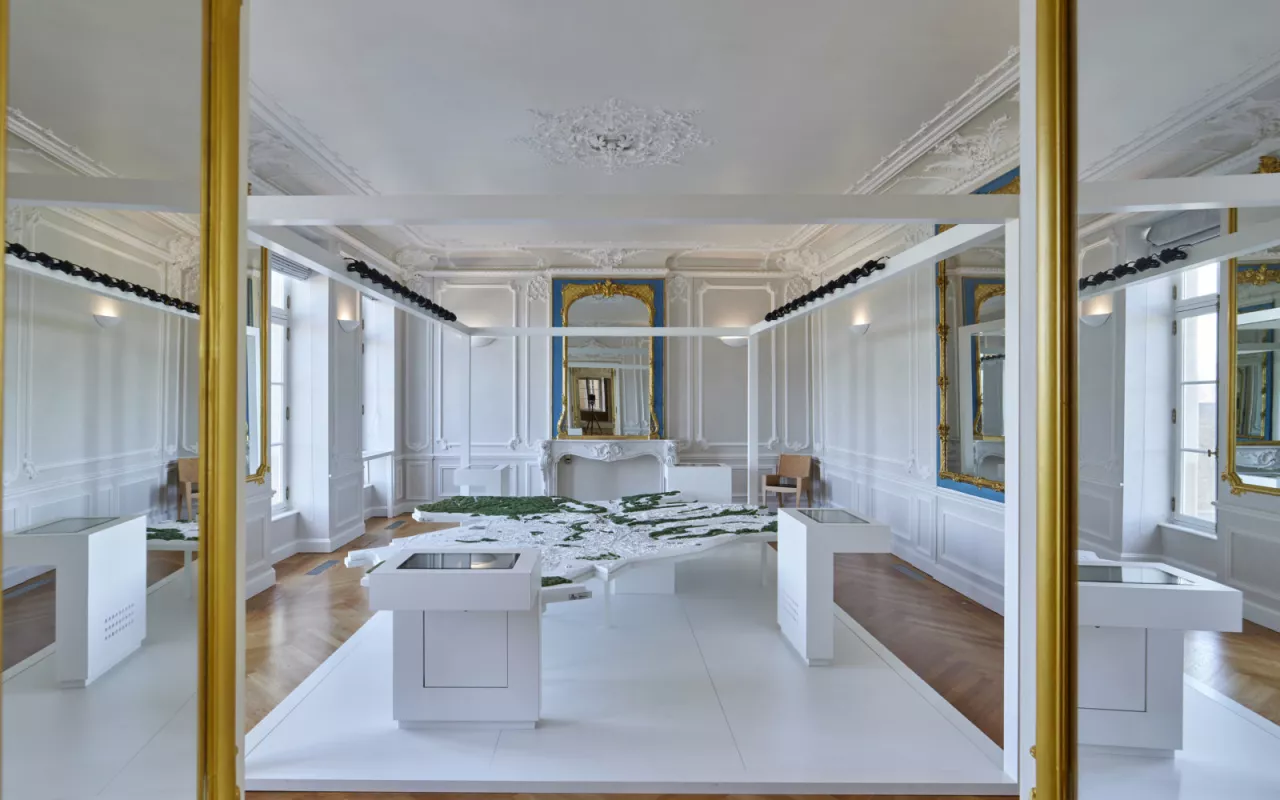
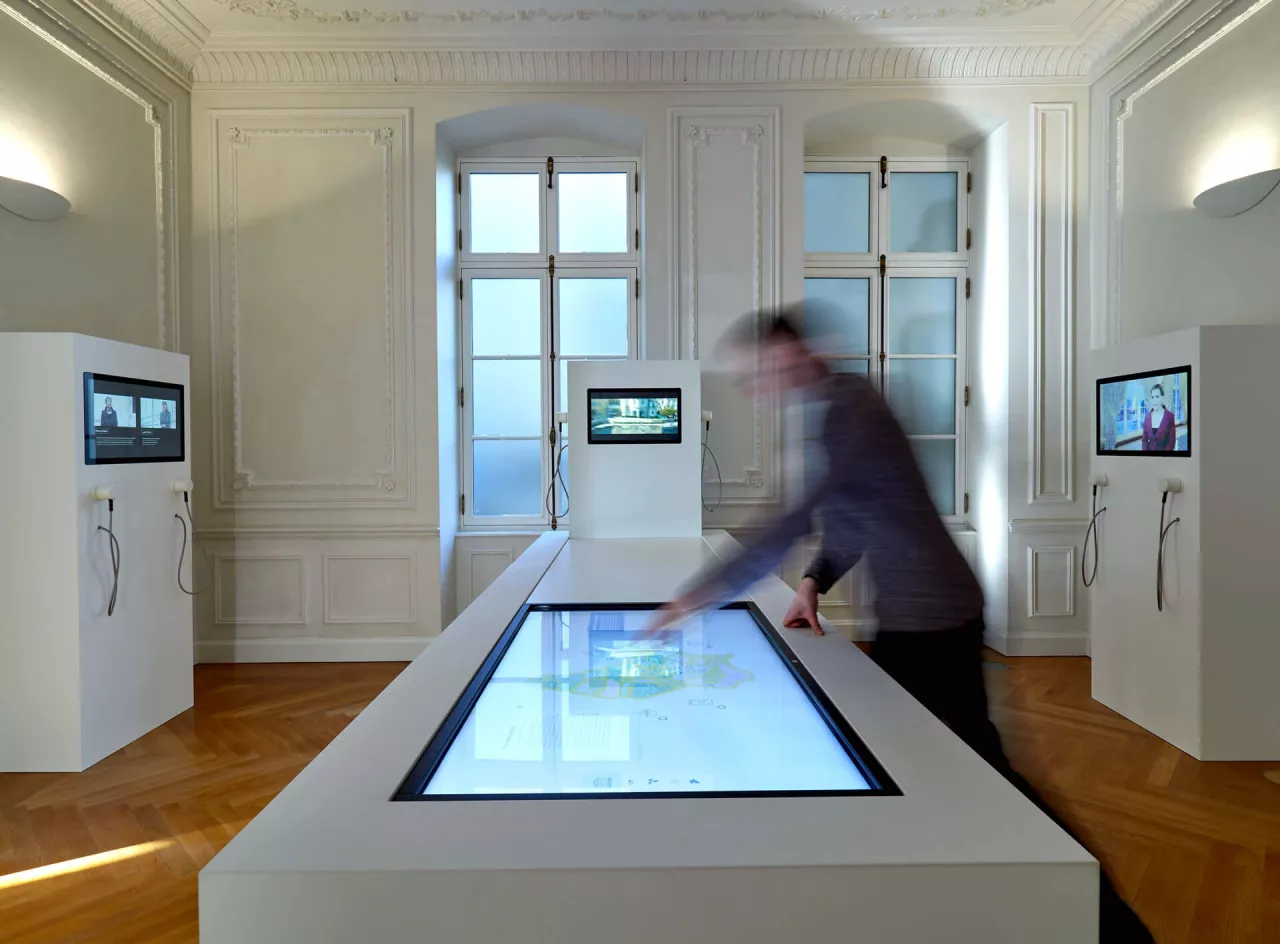
The Visitor Centre sets out UNESCO's aims, the origins and significance of World Heritage, then the features of the Luxembourg site and the criteria behind its inscription. It also covers what comes after the listing: the conservation measures in place and the way the site is woven into the capital's urban development.
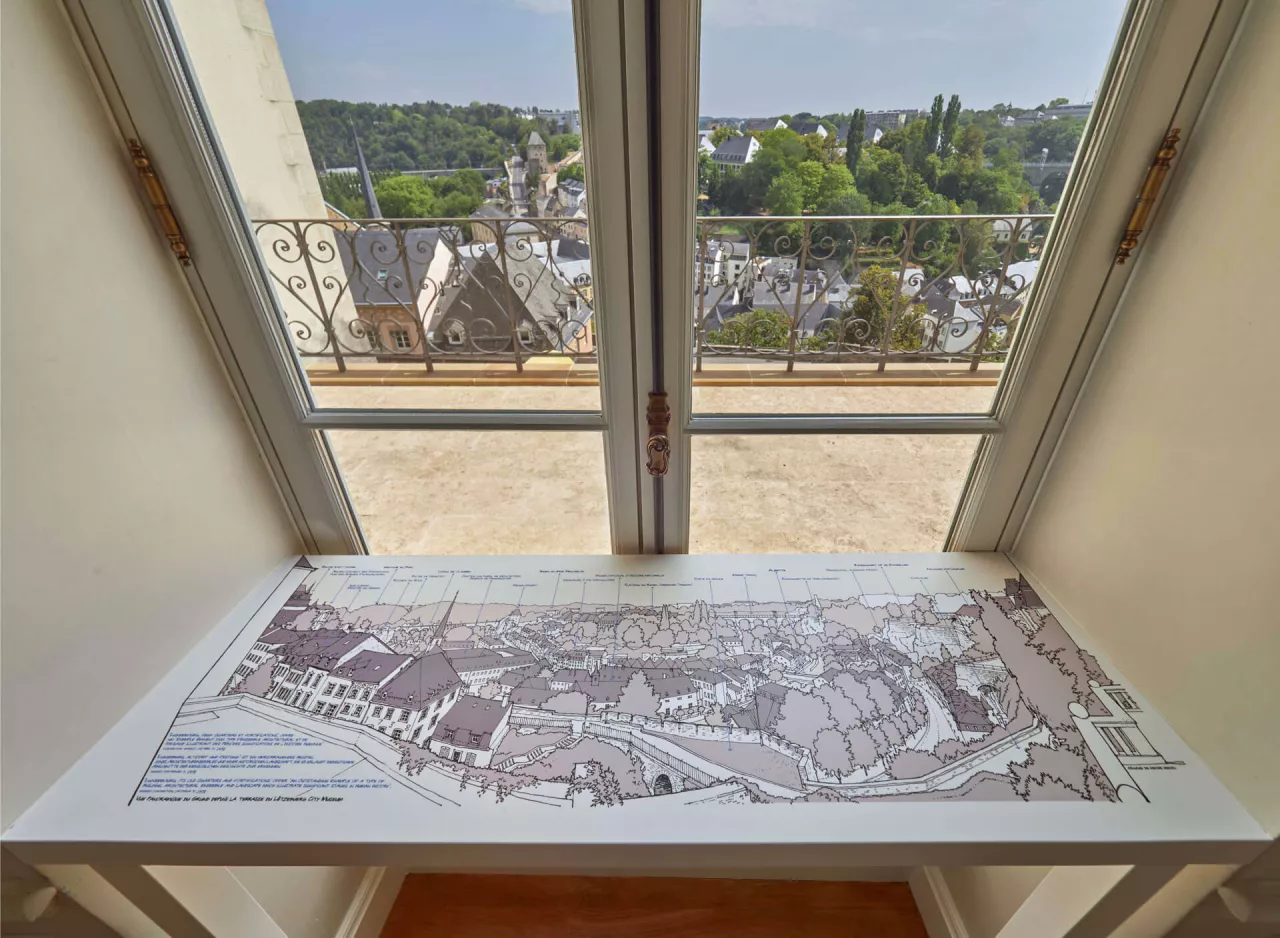
The space is designed as a first orientation. It gives you the keys to read the city before setting out to explore the listed urban heritage for yourself.
The Visitor Centre picks up the historical thread of the museum's permanent exhibition, in the same building and along the same route.
A site inscribed under criterion iv
To enter the World Heritage List, a property must hold outstanding universal value, meet at least one of UNESCO's ten selection criteria, and satisfy conditions of integrity, authenticity, protection and management. Until 2004 the criteria formed two separate sets, six for cultural properties and four for natural ones. They have since been merged into a single set of ten, revised regularly by the World Heritage Committee to keep pace with how heritage itself is understood.
Luxembourg is inscribed under the fourth of these criteria, which recognises properties that are an outstanding example of a type of building, architectural or technological ensemble, or landscape, illustrating a significant stage in human history. What is listed here is therefore not a single monument but an entire urban ensemble.
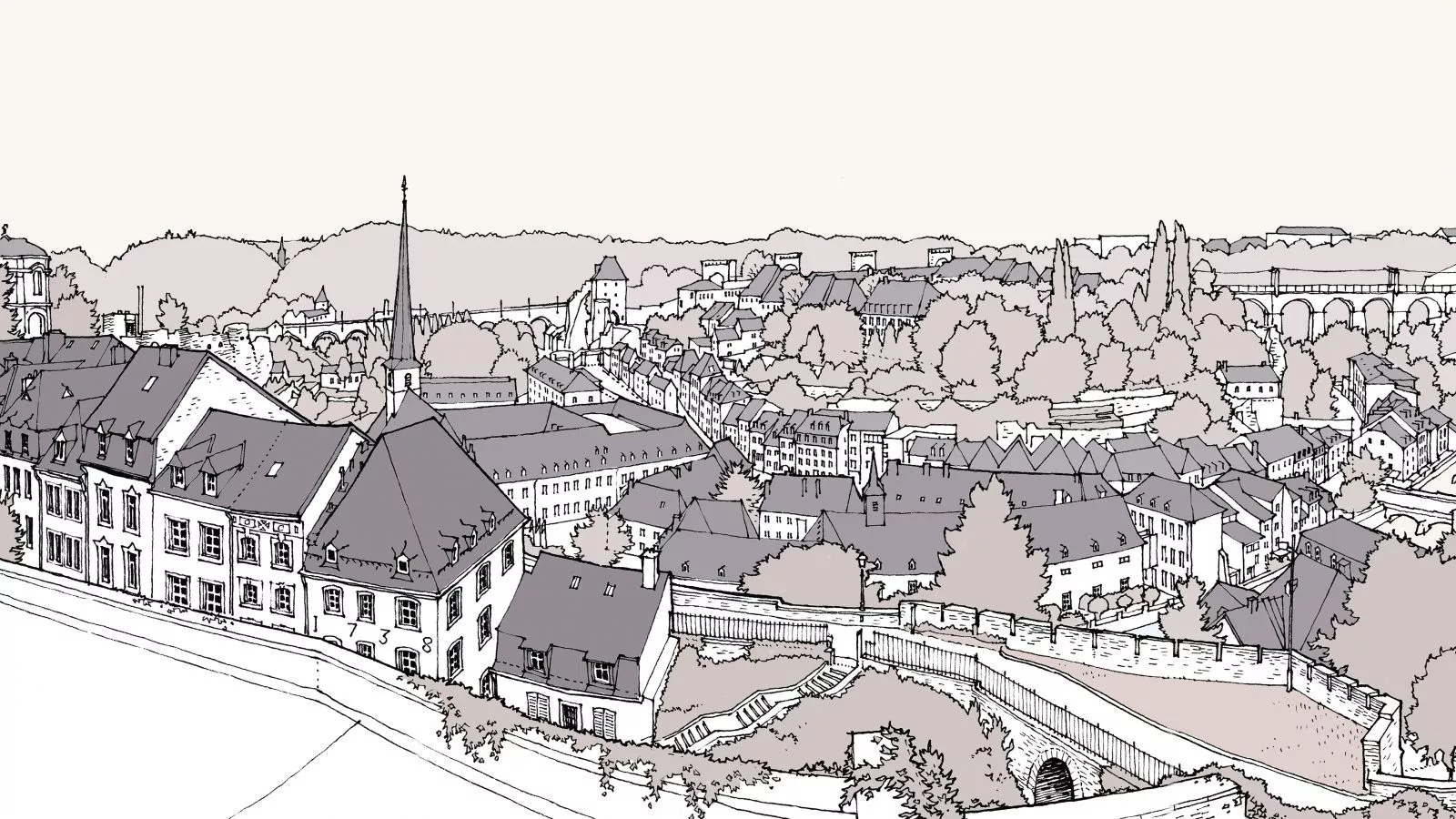
The property's official name is "City of Luxembourg: its Old Quarters and Fortifications". Thanks to its strategic position, Luxembourg was one of Europe's greatest fortified sites from the 16th century until its walls were dismantled in 1867, reinforced in turn by each power that took hold of it, from the Holy Roman Emperors to the Prussians, by way of the House of Burgundy, the Habsburgs and the French and Spanish kings. Today the city stands as a historic ensemble of the first order, an outstanding example of a fortified European city and a witness to a long period of Western history.
Accessibility and inclusion
Accessible audio-guided tours are available for exploring this interpretation space.
A 52-page visitor booklet written in plain language is available on site and at the Luxembourg City Tourist Office, along with a PDF version with improved readability. It was developed with several organisations representing people with disabilities, among them KLARO, Hoergeschaedigten-Beratung, the Centre pour le développement des compétences relatives à la vue, Info-Handicap and ADAPTH. Accessible audio-guided tours complete the offer.
Going further
Visit in 3D.
The Visitor Centre can also be explored remotely, as a 3D virtual tour.
The UNESCO Walk
This guided tour follows the fortifications through the Pétrusse park and ends in the old town. On request and with prior arrangement, it can include the Visitor Centre and the archaeological crypt beneath the Plateau du Saint-Esprit. Organised by the Luxembourg City Tourist Office.
Exhibition impressions
Newsletter
The next exhibitions, announced straight to your inbox.